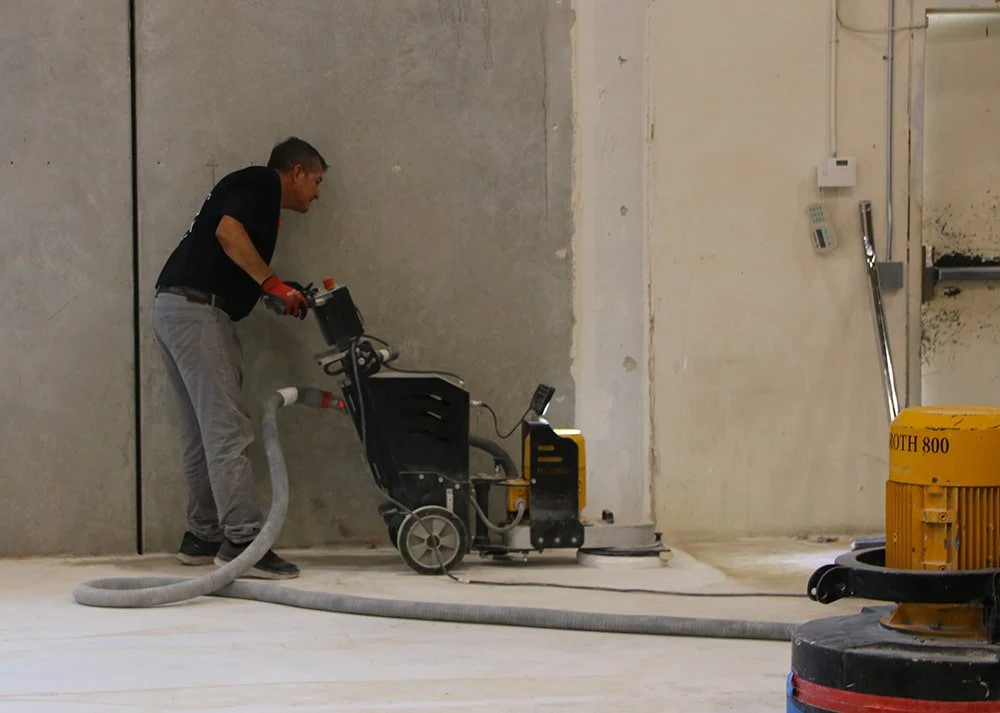
Concrete floors age in visible and structural ways. Surface dust, raised edges, worn coatings, and shallow defects can make a slab harder to clean and less pleasant to use. Careful grinding corrects height variation and removes weak material. Polishing then closes the surface through finer abrasion, creating a denser finish with controlled sheen. The result supports safer movement, easier upkeep, and a cleaner architectural character.
Surface Renewal
Assessment comes first, because slab hardness, moisture, cracks, and old coatings all affect the result. After cleaning and repair, diamond tooling removes damaged material in measured passes. In homes, shops, and work areas, concrete grinding and polishing can restore an exposed slab without adding a separate covering, while keeping the surface practical for regular traffic.
Better Daily Safety
Small height changes can disturb gait, catch wheels, and increase the risk of trips. Grinding reduces ridges, adhesive residue, uneven joints, and exposure of rough aggregate. A flatter plane helps people, carts, chairs, and equipment move with less resistance. Polishing also limits loose cement dust, which supports cleaner indoor air and reduces residue on shelving, stock, tools, and nearby finishes.
Stronger Visual Value
A polished slab has a clear, grounded appearance. It can work in homes, showrooms, cafes, clinics, offices, and light industrial spaces. Finish levels vary from low sheen to reflective gloss, depending on the polishing sequence. Aggregate exposure also shapes the final look, with options ranging from faint stone detail to a more pronounced decorative surface.
Practical Maintenance
Dense polished concrete is easier to maintain than many porous or covered floors. Dust and spills stay closer to the surface rather than quickly soaking into open capillaries. Regular sweeping and damp mopping handle most soil. A compatible sealer is a must for protection against moisture, staining, and abrasion, especially in homes with constant foot traffic or equipment movement.
Cost Control
Using the existing slab can reduce the need for tiles, vinyl, carpet, or epoxy coatings. Less removal work means fewer disposal costs and shorter preparation time. In many buildings, the structural slab can become the finished floor. That keeps the project simpler, limits the use of added materials, and helps owners direct their budget toward repair quality, finish selection, and long-term care.
Home Spaces
Garages, kitchens, living areas, laundries, and patios can benefit from a refined concrete surface. Smooth floors make storage, cooking, hobbies, and family activities easier to manage. The finish also pairs well with open layouts because a single continuous plane can visually connect rooms. In some homes, polished concrete may also facilitate efficient heat transfer when paired with suitable underfloor systems.
Commercial Areas
Commercial floors face repeated loading from shoes, chairs, carts, displays, and cleaning machines. Polished concrete provides a tidy finish with strong resistance to routine abrasion. Its reflective surface can improve light distribution across retail, office, clinic, and hospitality interiors. Because the slab remains exposed, maintenance teams can inspect wear, contamination, or damage without lifting hidden layers.
Process Quality
Good results depend on patient preparation and correct tooling. Coarse grinding removes larger faults first, then medium and fine passes refine the texture. Polishing compounds and sealers help improve density, clarity, and stain resistance. Skipping steps can leave swirl marks, uneven gloss, exposed weak patches, or premature wear. A tested sequence gives the floor its best service life.
Finish Choices
Owners can choose matte, satin, semi-gloss, or high-gloss finishes. Each option changes light reflection, visible texture, and aggregate definition.
Site Conditions
Moisture, slab hardness, cracks, contamination, and coating history shape the work plan. Early testing helps set accurate expectations.
Sustainability Benefits
Reusing an existing slab can lower material demand and reduce waste. Fewer coverings mean fewer adhesives, backing layers, and later removals. A polished concrete floor can also last for many years with proper care. Its brightness may improve available light across a room, reducing the need for extra fittings in some spaces.
Long-Term Impact
The value of this work lies in its combined effect. One process can improve surface level, appearance, cleanability, and durability. A plain slab becomes a finished floor with practical strength and visual restraint. With proper preparation and correct sealing, polished concrete can serve busy spaces for years while keeping maintenance predictable and ownership costs easier to manage.
Conclusion
Concrete grinding and polishing work changes a floor at both surface and performance levels. It removes weak material, corrects irregular areas, and builds a denser finish that can tolerate daily traffic. The method suits many properties because it improves function without obscuring the slab. For owners planning upgrades, it offers a practical way to preserve existing concrete while improving safety, appearance, and care routines.


